The Coldcard hack last week dealt a low blow to certain elements of the Bitcoin industry. A somber introspection has begun to question many of the practices and assumptions involved in securing bitcoin at a retail level. The consequences of this process might not be visible for many months.
Some are saying that self-custody is dead. Some reports estimate that over 11,000 bitcoins were moved to custodial exchanges last week as users fled one of the most popular hardware wallets in the Bitcoin industry. The hack, which is ongoing and users can still save themselves from, has seen north of 1,300 bitcoins stolen, with some estimates as high as 2,000 coins.
Coinkite in particular and its most vocal founder, NVK, had very strong opinions about what it took to secure bitcoin private keys from hackers. Its hardware wallets were airgapped to make sure malware could not exfiltrate data through USB cables. It used low-resolution, LED screens to avoid the complexity of touch screens. It developed protocols like BBQR and integrated NFC so that information could be transferred between the device and a computer without them touching or sharing SD cards. The list of paranoid design choices that made Coldcards iconic is long.
Yet the hackers involved in the theft of bitcoins held in Coldcards last week did not use any methods you might see in a modern spy movie. They exploited the one feature Coldcard should have had absolutely locked down. The generation of keys with high enough randomness, also known as entropy. In other words, secrets securing that are actually, mathematically hard to guess. While the devices were intended to use high-quality sources of entropy, the firmware had a bug which did not, resulting in Bitcoin private keys that were, in turn, easy to guess. The bug went undiscovered for years, and the product only grew in popularity in the meantime, until last week.
“Just buy the ETF bro”
Despite this loss, which wounded a cohort of Bitcoiners who were among the most committed. Bitcoin can not give up on self-custody and expect to retain its integrity. At least that is what many in the industry believe, and the case for that is clear.
Satoshi Nakamoto’s white paper clearly intended Bitcoin to be a solution to trusted third parties and intermediaries. It eloquently made the case against trusted hierarchies of finance, as the 2008 financial crisis revealed the deep systemic risks and flaws legacy finance has led to. Many believe the 2008 crisis was never escaped, its consequences haunting us to this day.
Going further back to the birth and proliferation of the modern banking system and its fiat currency. The 6102 executive order signed by President Franklin D. Roosevelt in 1933 saw the persecution and confiscation of gold from centralized trusted third parties and citizens alike. $300,000,000 in gold was returned after the executive order threatened gold owners with heavy fines and jail time if they did not sell their bullion to the banks at $20,67 per ounce. Over 14 million troy ounces worth of gold were turned in as a result. Another 200 million troy ounces are estimated to have been held in the American banking system at the time. The banking system, not just in the U.S. but worldwide at the time, was built atop the gold standard.
The U.S. was the largest economy of the world at the time, with the biggest concentration of gold inside its borders. Its abandonment of the gold standard was a death blow to gold as a free market pricing mechanism for goods and services as a whole. Governments throughout the world, now free from the chains of sound money, quickly fed and fattened from the hidden tax of inflation. At the time of the EO, the price of gold was artificially fixed to $20.67 an ounce; not a year later, it was repriced to $35 with the passing of the Gold Reserve Act in 1934, a 69% devaluation in the dollar.
The fiat standard was thus delivered to governments throughout the world on a silver platter, by an unholy alliance between the banking system and politicians. It granted central banks the legal right to counterfeit money, to print it at will. It was soon followed by World War Two, which was of course funded by fiat currency. Tens of millions of people sacrificed in this war at the altar of state power.
Fast forward a hundred years and U.S. government debt demands almost a trillion per year be paid in interest alone, with total owed close to 40 trillion and debt to GDP at 123%. These are arguably the inevitable yet predictable consequences of the death of the gold standard. The purchasing power of the dollar has collapsed in the century that followed, at the same time as technology has gone parabolic in its efficiency gains. That is only possible with money that has continually become worthless for decades. And the dollar is the best of the fiat lot.
Confiscation of gold in a rising power like the United States murdered the gold standard. It, however, could not have been possible if civilian custody of gold had been wider and more distributed. Many of the civilians who returned millions in gold after the 6102 EO had just taken it out of their accounts in a bank run. Their names were known, the amount of gold they held, tallied.
If gold was easier to move in large quantities. If private gold ownership totals had been more ambiguous. If removing the free flow of gold had not been so easy for the state to do, by knocking on the doors of bankers and pointing a gun, then perhaps the economies of the world would not have been able to withstand such a vast and destructive war, as was WWII for so long, in the following decade.
Bitcoin is Gold, Engineered To Survive a 6102 EO
Bitcoin poses an alternative to gold, designed to learn from its inadequacies. Bitcoin has better properties to resist and survive such a confiscation. Bitcoiners envision and aspire to unlock a world that adopts Bitcoin as a global monetary standard. Where a large minority or even a small majority of the global economy uses Bitcoin as their primary store of value. In such a future, Bitcoin would take the place of gold and return sound money to the so-called capitalist order.
To reach global reserve currency and defend this position, Bitcoin will need to be better than gold, and it can be better precisely because of its digital nature. The control of private keys, as difficult as it seems now in the shadow of the Coldcard hack, nevertheless can be far more powerful than any physical vault. Multi-signature scripts alone unlock distributed storage of Bitcoin private keys, such that a threshold of them must approve to move coins. This means that multi-jurisdictional, multinational vaults can exist and escape or resist the greedy hands of a large state that might attempt a new kind of 6102 takeover.
The digital nature of Bitcoin means large amounts of value can be moved easily as well, without having to send the navy on a mission to pick up the gold. Without having to build a trusted hierarchy of banking custodians to transfer it. Civilians, with tools available today and better tools that are yet to come, might be able to hide their Bitcoin ownership as has been done in war-torn countries like Ukraine already, escaping a fearsome state’s grip over the public’s wealth.
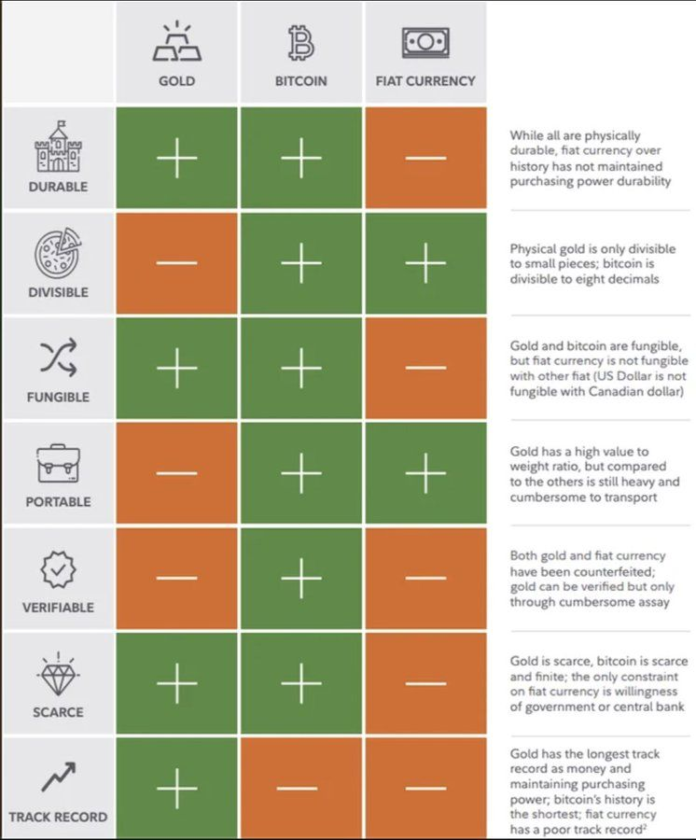
Ultimately, a major hardware wallet manufacturer has failed the Bitcoin industry. The fundamental qualities of money remain the same, and among them all, as identified by Aristotle and others beyond him, Bitcoin remains king.
“Bitcoin vs gold vs fiat One is not like the others” – @BITCOINARCHIVE